
Statutory definition
“The abusive behaviour of one person towards another where they are personally connected and each is aged 16 or over.”
This statutory definition comes from the landmark Domestic Abuse Act 2021 and emphasises that domestic abuse includes not only physical violence, but other forms of abuse such as coercive or controlling behaviour and economic abuse.
Domestic abuse can happen once or as part of a pattern of abusive behaviour. It is not always physical, and can include sexual abuse, threats, control and coercion and psychological or emotional abuse.
Domestic abuse can affect people in a range of relationships from people who are married to intimate partners, family members and ex-partners. Children affected by domestic abuse are victims in their own right, regardless of whether they were present during incidents of abuse.
Domestic abuse can, and does, happen to anyone in our society, regardless of background.
Further information can be found in the
What counts as abusive behaviour
The Domestic Abuse Act 2021 brought many important
changes, including a statutory definition of all forms of abusive behaviour.
A key part of an effective response as an employer is to encourage everyone in your organisation to develop an awareness of the many forms domestic abuse can take.
We have outlined some forms of abusive behaviours below. This is not an exhaustive list and everyone’s experience of domestic abuse will differ.
A full description of all abusive behaviours can be found in the Domestic Abuse Act 2021 Statutory Guidance.
Controlling or Coercive Behaviour
Controlling or coercive behaviour is a systematic pattern of behaviour intended to undermine someone, that may leave no physical evidence but that causes immense harm.
This behaviour ranges from controlling someone’s daily activities, to cutting off their access to finances and isolating them from friends and family.
The following are examples of some of the range of behaviours that might be considered controlling or coercive behaviour:
- Controlling or monitoring the victim’s daily activities and behaviour, including making them account for their time, dictating what they can wear, what and when they can eat, when and where they may sleep;
- Controlling a victim’s access to finances, including monitoring their accounts;
- Isolating the victim from family, friends and professionals who may be trying to support them, intercepting messages or phone calls;
- Preventing the victim from taking medication, over-medicating them, or preventing someone from accessing health or social care;
- Using children to control someone, e.g. threatening to take the children away;
- Using animals to control or coerce a victim, e.g. harming or threatening to harm, or give away, pets or assistance dogs;
- Threatening precarious immigration status against the victim.
Coercive and controlling behaviour is a criminal offence in England and Wales under the Serious Crime Act 2015.
For an insight into coercive and controlling behaviour, watch the film: The TimeKeeper. Warning: this film contains scenes you might find distressing.
Economic Abuse
Economic abuse refers to behaviour that has a substantial negative impact on an individual’s ability to acquire, use or maintain money or other property, or to obtain goods or services.
Economic abuse can take subtle and insidious forms, such as secretly putting someone into debt, wrongfully taking child benefits, not paying bills, removing or controlling access to Wi-Fi, or hiding items that the other person could rely on.
Many abusers will specifically target someone’s job or career (and thus, independence/earning potential), by preventing them from being in education or employment. This could involve limiting their working hours, making them consistently late for work, causing injury so they must call in sick, hiding car keys or breaking glasses so they can’t drive to work, withholding money so they can’t use public transport, forcing them to take unpaid leave, or not allowing them to attend training courses.
Further information is available from:
Harassment
Harassment includes repeated attempts to impose unwanted communications and contact upon a victim, in a manner that could be expected to cause distress or fear. It is generally acknowledged that harassment involves behaviour that is intended to cause a person alarm or distress or to cause them to fear violence.
Honour-Based Abuse
‘Honour’ based abuse is normally a collective and planned punishment, mainly against women and girls, by their family or their community, to defend their perceived honour because it is believed the person has done something to bring shame on the family or the community.
It can take many forms including: ‘honour’ killing, forced marriage, rape, forced suicide, acid attacks, mutilation, imprisonment, beatings, death threats, blackmail, emotional abuse, surveillance, harassment, forced abortion and abductions.
Definition from IKWRO.
Physical Abuse
Physical abuse and violent or threatening behaviour can be a form of domestic abuse when someone hurts or injures someone else on purpose. It includes the threat of physical harm. This might include:
- being, or being threatened to be kicked, punched, pinched, pushed, dragged, shoved, slapped, scratched, strangled, spat on and bitten;
- being hurt, or threatened, with a weapon;
- objects being thrown at someone;
- violence, or threats of violence against family members;
- damaging, tampering with, or denying access to medicine, medical aids or equipment;
- preventing someone from sleeping.
Emotional and Psychological Abuse
Emotional and psychological abuse are forms of behaviour with the specific intent to make a person feel fearful or undermined, and diminish their confidence in their abilities – for example, manipulating a person’s anxieties or beliefs.
It could include being insulted in front of others – for example, about their age, faith or sexuality — or undermining a person’s ability to work.
Sexual Abuse
Sexual abuse involves any form of sexual activity that occurs without the full and informed consent of all parties. It can involve:
- Rape and sexual assault;
- Being pressured into sex, or sexual acts, including with other people;
- Unwanted sexual contact or demands;
- ‘Corrective’ rape (the practice of raping someone with the aim of ‘curing’ them of being LGBT);
- Being tricked into having unsafe sex;
- Forced involvement in making or watching pornography;
- Hurting a victim during sex including non-fatal strangulation ;
- Reproductive coercion e.g. restricting a partner’s access to birth control or forcing them to have an abortion.
Stalking
Stalking is a pattern of repeated, unwanted, and obsessive behaviour which has a serious, adverse effect on a person’s daily activities or makes them fear violence. This can include harassment, repeated unwanted communications such as messages, phone calls or emails, repeatedly following a person online or in person, monitoring their locations and activities, or encouraging others to spy on them.
This often happens at the end of a relationship with a domestic abuser.
Domestic abuse affects us all
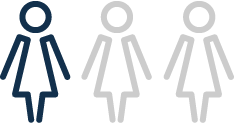
One in three women experience domestic abuse in their lifetime¹

One in five men will experience domestic abuse in their lifetime¹
of adults reporting domestic abuse said children under 16 were present²